The Agentic Era and Beyond
Shaping the Future of AI-Driven Engineering
The era of AI as a simple coding assistant is over. We have entered a new phase where Artificial Intelligence is reshaping the entire Software Development Life Cycle (SDLC).
The software industry is in the middle of a once-in-a-generation shift. AI is no longer a feature you add. It is becoming a new layer of the engineering stack, changing how we think, design, build, ship, and operate software.
AI Heroes is the international conference on AI for developers, by developers. A place where builders compare notes, share battle-tested patterns, and shape what “AI-native engineering” really means.



Our Audience
Our Focus
Our Mission
AI Heroes is built for people who actually ship. Expect deep technical sessions and best practices you can debate, test, and take back to your team. You will leave with concrete moves for what you are building next.
We provide real-world experience, enterprise case studies, and ‘lessons learned’ patterns, and playbooks you can apply the next day.
We also tackle the human side of the shift: how teams evolve when agents join the delivery chain, how to upskill senior engineers, how product discovery changes in an AI-native world, and how to move fast without sacrificing craftsmanship.
A new format
Morning
Hands-on Workshop Sessions (Deep dive). Two ~90′ Workshops. Maximum capacity 30 people
€90, conference ticket included.
Afternoon
Strategic Conference Program (Case histories & Vision). 30’/40′ sessions + Q&A.
Only 30€, networking aperitif included.
Evening
Networking Aperitif & Community Building.
Included in all tickets.
Speakers
6 November Workshops announced
Building AI apps with the Google ecosystem
The way we build software has changed. Today, the most successful developers aren’t just writing code, they are orchestrating AI tools and agents to build better and faster. This hands-on session is a deep dive into this modern “Builder Stack”, where you will learn how to build with a variety of tools in the Google ecosystem.
Come to this session if you want to spend less time configuring and more time creating. We’ll guide you through a complete development lifecycle, from prototyping an idea, to generating a beautiful UI, building AI features, and integrating a secure, scalable backend.
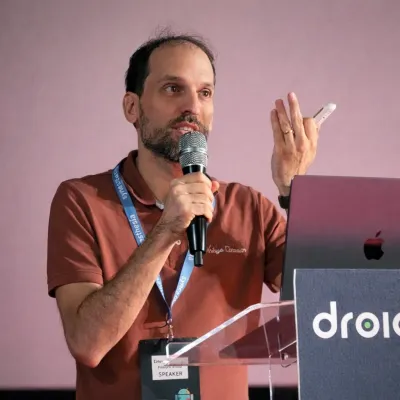
Peter Friese
Peter is a Staff Developer Advocate on the Firebase at Google, helping developers build amazing experiences and high quality apps using Firebase and AI.
With a passion for empowering developers and fostering innovation, Peter works tirelessly with the Firebase team to make his vision of “cutting short the time to magic” a reality.
Peter is also the author of the book Asynchronous Programming with SwiftUI and Combine: Functional Programming to Build UIs on Apple Platforms and host of the YouTube show Firebase After Hours, in which he and his colleagues explore Firebase in a light-hearted and fun setting.
He has written code in BASIC, C, ObjectPascal, Java, Kotlin, Xtext, JavaScript, TypeScript, Objective-C, and a number of home-grown DSLs – but his all-time favourite is Swift.

Pragmatic Agentic Development: Docs, Context and Workflow in Practice
This workshop is a pragmatic, opinionated approach to agentic development for solo developers and small teams. It starts from one rule: document first, agent oriented. Documentation and code evolve together, each change to one carries a change to the other, so the project always explains itself to the agents working on it. The docs are organized to be self-discovered and self-maintained, optimized for context handling.
We’ll work hands-on on a sample project, and we’ll let it evolve. You’ll understand how to make the documentation self-organizing, and complement it with a smart use of skills. Finally, you’ll adopt a workflow that is flexible in how you use it and rigid in its steps: a small fixed sequence of stages that keeps agents on track without turning into process overhead.
You’ll leave with an example approach that you can adapt to your own projects, and increased awareness of how agents behave, so you can make more efficient use of the tools at your disposal.
Takeaways:
– A good strategy to organize a project and its documentation.
– A self-organizing approach to docs that resists drift.
– Some examples of effective workflows.
– A better understanding of agentic coding, and not only coding
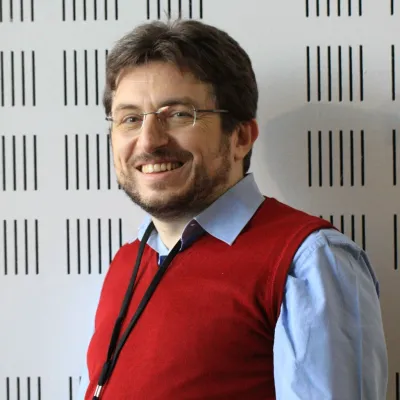
Marco De Nittis
Freelance consultant, trainer and technology enthusiast with a deep love for every layer of product life — from architecture and DevOps to actual coding.
He has worked with both large enterprises and smaller companies, contributing to a wide variety of projects across the full software lifecycle.
Involved in building GenAI solutions — from design to implementation — with a keen interest in the emerging standards and protocols shaping the AI ecosystem, such as MCP, AGUI, A2A, A2UI and the broader agentic landscape.
Pragmatic, eclectic and curious. AI, cloud, serverless and WebAssembly are the spaces where he spends most of his time — as a practitioner, consultant and trainer.
Focused on helping teams to embrace AI-aided software workflow: understanding how to work with AI to write enterprise level software, faster — without losing critical thinking.
He is lucky to have turned one of his passions into a profession.
Past editions
Join us
Community Partners
Testimonials
Our Speakers and Participants